
Natural Remedies for Asthma: What Works, What Doesn’t & When to Use Them
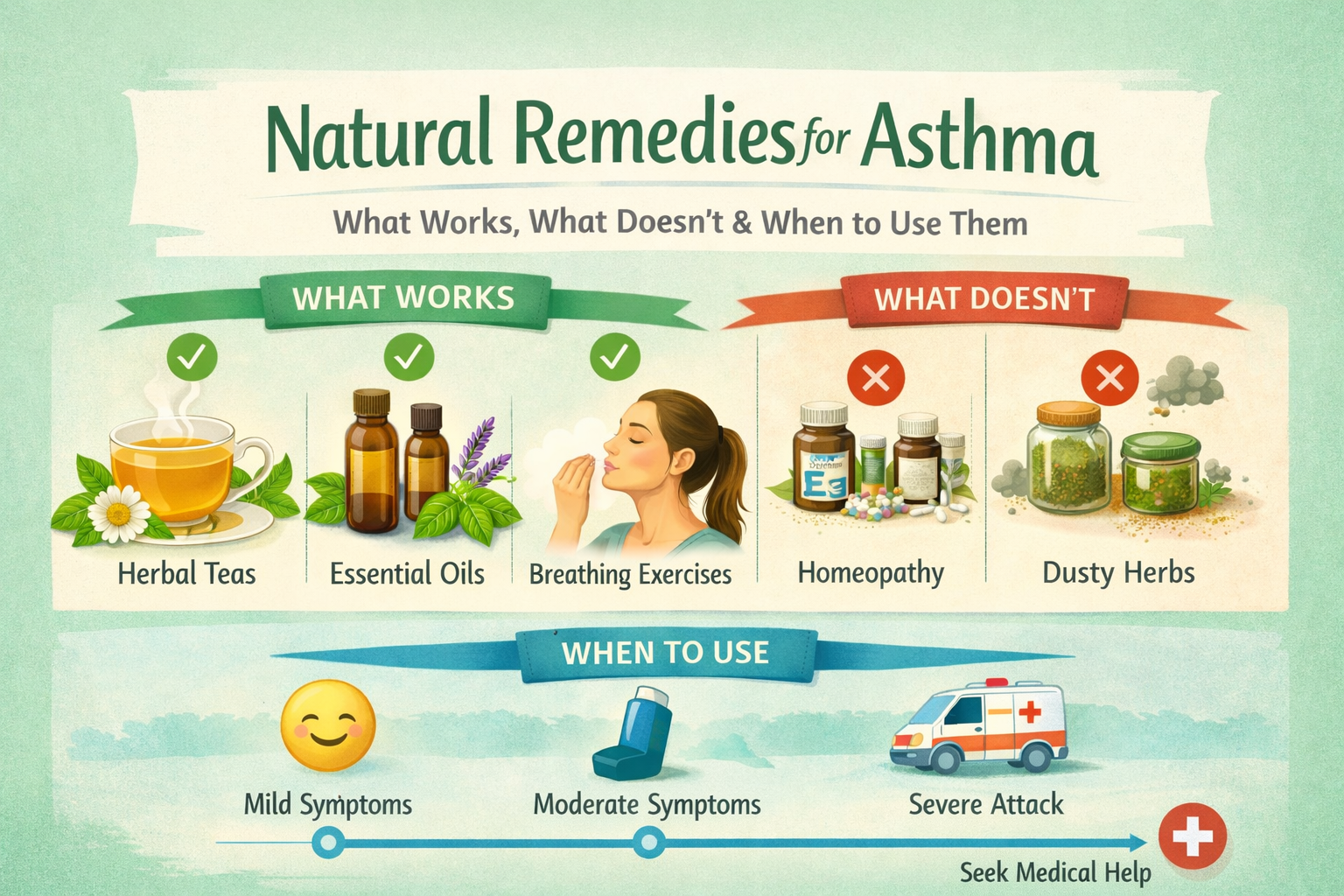
Asthma affects millions of people worldwide, causing symptoms like wheezing, shortness of breath, chest tightness, and persistent coughing. While conventional treatments like inhalers and medications remain essential, many people are increasingly searching for natural remedies for asthma to complement their care and improve daily quality of life.
But here’s the truth: natural remedies can help manage symptoms, but they are not a cure. The key is knowing what works, what doesn’t, and how to use these remedies safely alongside medical treatment.
This guide covers everything you need to know, including home remedies for asthma, herbs, breathing techniques, and how to build a complete asthma management plan.
What Is Asthma? (Quick Overview)
Asthma is a chronic condition that affects the airways in your lungs. When triggered, the airways become inflamed, narrow, and filled with mucus, making it harder to breathe.
Common Symptoms:
- Wheezing
- Shortness of breath
- Chest tightness
- Persistent coughing (especially at night)
Types of Asthma:
- Allergic asthma – triggered by allergens like dust or pollen
- Cough variant asthma – mainly presents as chronic coughing
- Exercise-induced asthma – triggered by physical activity
Understanding your type of asthma is the first step toward finding the most effective cough variant asthma natural treatment or broader management strategy.
Can Natural Remedies Cure Asthma?
No – asthma cannot currently be cured, either naturally or medically.
Natural remedies can:
- Reduce inflammation
- Improve breathing
- Lower frequency of symptoms
But they cannot replace prescribed medications, especially rescue inhalers.
Think of natural treatments as supportive tools, not substitutes.
What to Do During an Asthma Attack
This is critical.
If you’re having an asthma attack:
- Use your prescribed rescue inhaler immediately
- Sit upright and try to stay calm
- Take slow, controlled breaths
- Seek medical help if symptoms don’t improve
⚠️ Do NOT rely on home remedies during an attack.
Natural asthma inhaler alternatives like steam or herbs are too slow and ineffective in emergencies.
Best Natural Remedies for Asthma Relief
Here are the most effective, evidence-supported natural approaches to managing asthma symptoms.
1. Breathing Exercises for Asthma
Breathing techniques can significantly improve lung function and reduce symptoms over time.
Popular Methods:
- Buteyko Breathing – focuses on reducing over-breathing
- Papworth Method – combines breathing and relaxation
- Pursed-lip breathing – slows breathing and keeps airways open
Practicing these daily can help reduce reliance on medication in mild cases.
2. Herbal Remedies for Asthma Treatment
Many herbs have anti-inflammatory and bronchodilatory properties.
Common Herbs:
- Turmeric – contains curcumin, which reduces inflammation
- Ginger – helps relax airway muscles
- Garlic – supports immune function
- Ginseng – may improve lung function
- Black seed (Nigella sativa) – widely used in traditional medicine
These are among the most popular herbs for asthma treatment, but results vary from person to person.
3. Natural Asthma Inhaler Alternatives
While nothing replaces a real inhaler, some natural methods may offer temporary relief.
Options:
- Steam inhalation – helps open airways
- Humidifiers – prevent dryness that can trigger symptoms
- Essential oils (like eucalyptus) – may aid breathing (use cautiously)
⚠️ Always test for sensitivity, some scents can actually trigger asthma.
4. Home Remedies for Asthma Relief
Simple lifestyle-based remedies can make a noticeable difference.
Effective Home Remedies:
- Drinking warm liquids (tea, broth)
- Staying hydrated
- Using honey to soothe airways
- Avoiding cold air exposure
These are easy, accessible home remedies for asthma that support daily symptom management.
5. Diet & Nutrition for Asthma
What you eat plays a bigger role than most people realize.
Foods That Help:
- Fruits rich in Vitamin C (oranges, berries)
- Leafy greens (high in antioxidants)
- Foods rich in omega-3 fatty acids (fish, flaxseed)
Gut Health Matters:
A healthy gut microbiome may reduce inflammation and improve immune response.
Include:
- Yogurt
- Fermented foods
- Probiotics
6. Stress Reduction Techniques
Stress and anxiety can trigger or worsen asthma symptoms.
Helpful Techniques:
- Meditation
- Deep breathing exercises
- Yoga
- Massage therapy
Managing stress is a powerful but often overlooked natural remedy for asthma.
7. Exercise & Physical Activity
Exercise can improve lung capacity, ut must be done carefully.
Tips:
- Warm up properly
- Avoid cold, dry air
- Use an inhaler before exercise if prescribed
- Choose low-impact activities (walking, swimming)
Regular activity can reduce long-term asthma severity.
How to Create an Asthma-Friendly Home
Your environment plays a huge role in asthma control.
Key Changes:
- Use dust-proof bedding covers
- Wash sheets regularly in hot water
- Reduce indoor humidity (prevent mold)
- Use air purifiers
- Vacuum frequently
Creating a clean environment is one of the most effective long-term home remedies for asthma.
Common Asthma Triggers to Avoid
Avoiding triggers is just as important as treatment.
Common Triggers:
- Cigarette smoke
- Air pollution
- Dust mites
- Pet dander
- Strong perfumes or chemicals
- Weather changes
Identifying your personal triggers can drastically reduce symptoms.
Create Your Asthma Action Plan
A structured plan helps you stay in control.
Your Plan Should Include:
- Daily medications
- Trigger avoidance strategies
- Symptom tracking
- Emergency steps
This is essential for long-term asthma management and prevention.
⚠️ Risks & Limitations of Natural Remedies
Natural doesn’t always mean safe.
Important Considerations:
- Limited scientific evidence for many remedies
- Possible allergic reactions
- Herb-drug interactions
- Delayed treatment risks
Always consult a healthcare provider before trying new remedies.
When to See a Doctor
Seek medical help if:
- You have frequent asthma attacks
- Symptoms are worsening
- Your inhaler isn’t working effectively
- You experience severe shortness of breath
Early intervention can prevent complications.
Tools, Apps & Support for Asthma Management
Technology can help you stay on track.
Useful Tools:
- Asthma tracking apps
- Medication reminders
- Peak flow meters
- Online support communities
Tracking your symptoms can help you identify patterns and improve control.
FAQs About Natural Remedies for Asthma
Can asthma go away naturally?
No, but symptoms can be managed effectively with lifestyle changes and treatment.
What is the best natural asthma inhaler?
There is no true replacement for an inhaler, but steam inhalation may provide mild relief.
How do you stop asthma without an inhaler?
You shouldn’t rely solely on natural methods, always have a prescribed inhaler available.
Does diet affect asthma?
Yes, anti-inflammatory foods and gut health can influence asthma symptoms.
What are the best herbs for asthma treatment?
Turmeric, ginger, garlic, and black seed are among the most commonly used.
Conclusion
Natural remedies can play a powerful role in asthma management—but only when used correctly.
The best approach combines:
- Medical treatment (inhalers, prescriptions)
- Lifestyle adjustments
- Natural supportive remedies
By taking a holistic approach, you can reduce symptoms, improve your breathing, and live a healthier, more comfortable life.